SCL Model & Energy-Based Safety (2026 Update)
Energy-Based Thinking, SCL Definitions, and Event Classification Model
Overview
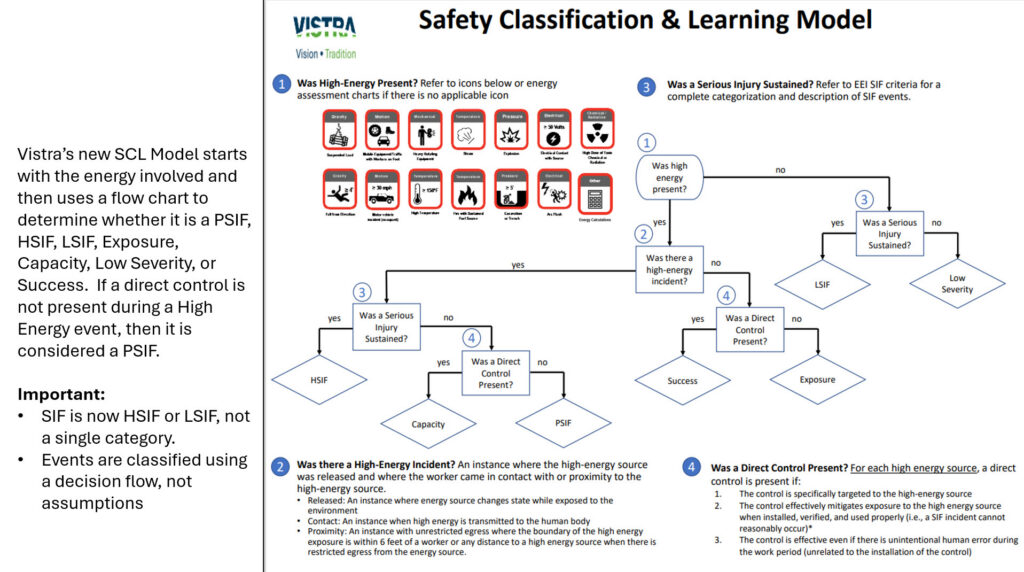
Vistra has transitioned to an energy-based classification model to improve consistency, accuracy, and learning across all sites. Events are now classified based on hazardous energy and exposure, not just the task being performed.
This approach focuses on identifying energy sources, evaluating exposure, and confirming that effective Best Defenses are in place.
Introduction to Energy Based Safety
Energy-Based Thinking
- Focuses on hazardous energy present, not just the task being performed.
- Evaluates whether energy was released, contacted a person, or came within proximity.
- Confirms whether direct controls, or Best Defenses, were in place and effective.
- Uses objective decision logic instead of assumptions or personal judgment.
High-Energy Categories
Events are evaluated against defined high-energy sources aligned with the new EEI energy icons. These include:
- Gravity / Motion: suspended loads, falls from elevation, mobile equipment, and vehicle movement.
- Mechanical: heavy rotating equipment.
- Temperature: steam, high temperature, and fire with a sustained fuel source.
- Pressure: explosions, excavations, trenches, and pressurized systems.
- Electrical: electrical contact at 50 volts or greater and arc flash exposure.
- Chemical / Radiation: toxic chemical exposure, oxygen-deficient atmospheres, corrosive exposure, or radiation.
- Other: energy sources that require calculation when they do not fit a defined category.
SCL Definitions
HSIF – High-Energy Serious Injury or Fatality
A serious injury occurred as a result of a high-energy release.
LSIF – Low-Energy Serious Injury or Fatality
A serious injury occurred with low or no high-energy exposure.
PSIF – Potential Serious Injury or Fatality
A high-energy event occurred without a serious injury, and no direct control or Best Defense was in place.
Capacity
A high-energy event occurred without a serious injury, but a direct control or Best Defense was in place and functioning.
Exposure
A high-energy hazard was present without a release, and no direct control was in place.
Success
A high-energy hazard was present, and a direct control or Best Defense was in place and effective.
Low Severity
The event did not involve high energy and is unlikely to result in a serious injury.